LAGOS
MODEL UNITED
NATIONS
leading West Africa's largest student-run Model UN conference — twice
the context
The Lagos Model United Nations (LMUN) conference is the largest annual student-run Model UN conference in West Africa. Founded in 2016, the organisation simulates the workings of United Nations agencies and committees, giving young people the opportunity to engage seriously with global affairs and develop the confidence to participate in them.
I first attended LMUN as a delegate in 2019. Over the following years, I moved from delegate to Vice Chair, Deputy Secretary-General and eventually Secretary-General. Each role gave me a different view of what it took to build the conference.
As Deputy Secretary-General, I owned the substantive and intellectual engine of the conference. As Secretary-General, I was responsible for the whole organisation. That meant strategy, fundraising, partnerships, staff, delegate acquisition, operations and, ultimately, whether the conference happened at all.
2022/23 — building the intellectual engine
As Deputy Secretary-General, I led the substantive side of the organisation.
My team trained 44 staff members through a 16-month preparation process and produced 11 research-backed background guides, some running to more than 70 pages. I also trained more than 100 delegates, many attending Model UN for the first time.
During my term, I established two committees from scratch: the International Court of Justice (ICJ) and the World Health Organization (WHO). This required developing new committee formats, training frameworks and documentation.
The 2023 conference ultimately brought together 206 delegates across 11 committees, with 25 resolutions passed and submitted to the United Nations Information Centre in Nigeria.
The experience taught me that leadership goes beyond knowledge transfer. You have to persuade people to care enough about an idea to give their time, energy and attention to it — particularly when nobody is paying them to do so. That lesson became crucial the following year.
2024 — taking responsibility for the whole organisation
I was appointed Secretary-General on 21 July 2023. Thirteen people, including myself, were handed the organisation and asked to make something of it. Our ambition was clear: build another successful conference while keeping LMUN accessible to Nigerian students.
The reality was considerably harder. Delegate fees were deliberately subsidised, meaning they barely covered operating costs. We needed university support for accommodation and access to three campus buildings. We had electricity problems. We needed sponsors. And we had 92 staff members to train, coordinate and motivate.
By August 2024, three weeks before the conference, the organisation was in serious trouble. We had only around 70 registered delegates. Sponsors were difficult to secure. Staff engagement was falling. And the conference model became increasingly difficult to explain to potential partners who wanted to reach thousands of students when our intentionally intimate conference could accommodate only around 300.
The problem wasn't simply a lack of money. It was a mobilisation problem. We had people, an idea and a conference worth saving. But our existing approach wasn't generating enough urgency.
the intervention
On 8 August, we held a general staff meeting and 22 people showed up out of 92. This was the moment I realised we couldn't continue managing the situation as we had been. We needed to change behaviour.
So I introduced a three-week delegate acquisition strategy built around a clear target, individual accountability and a real consequence.
The target
We needed at least 130 delegates by August 24. This wasn't an arbitrary number. With 11 committees, approximately 13 delegates per committee would give each room enough participants to create the interaction, coalition-building and debate that made the LMUN experience worthwhile.
The mobilisation mechanism
From 10–30 August, every staff member was required to publish something about LMUN every day on a social platform of their choice. They could use WhatsApp, Twitter, LinkedIn, Instagram or TikTok. I deliberately gave them freedom over the execution. I provided a content guide and examples, but people were encouraged to use their own voices and networks. Team leads monitored execution and reported back to me. I participated in delegate acquisition myself rather than asking the team to do work I wasn't willing to do.
The accountability mechanism
The campaign was tracked. Missing a day resulted in a warning. Three consecutive missed days resulted in a strike, and there was a real organisational consequence attached to the delegate target: if we failed to reach the number we needed, committees would have to be cut. Delegates who had already paid would be reassigned to other committees and staff numbers would be reduced.
The stakes were no longer abstract. Everyone could see exactly what was at risk.
what happened next
All of a sudden, staff members began turning their personal social channels into LMUN advocacy platforms. People started competing over who could bring in the most delegates. The campaign spread beyond what I had initially prescribed, to the point where some people began joking that we were doing too much.
That was exactly what I had been trying to create: momentum.
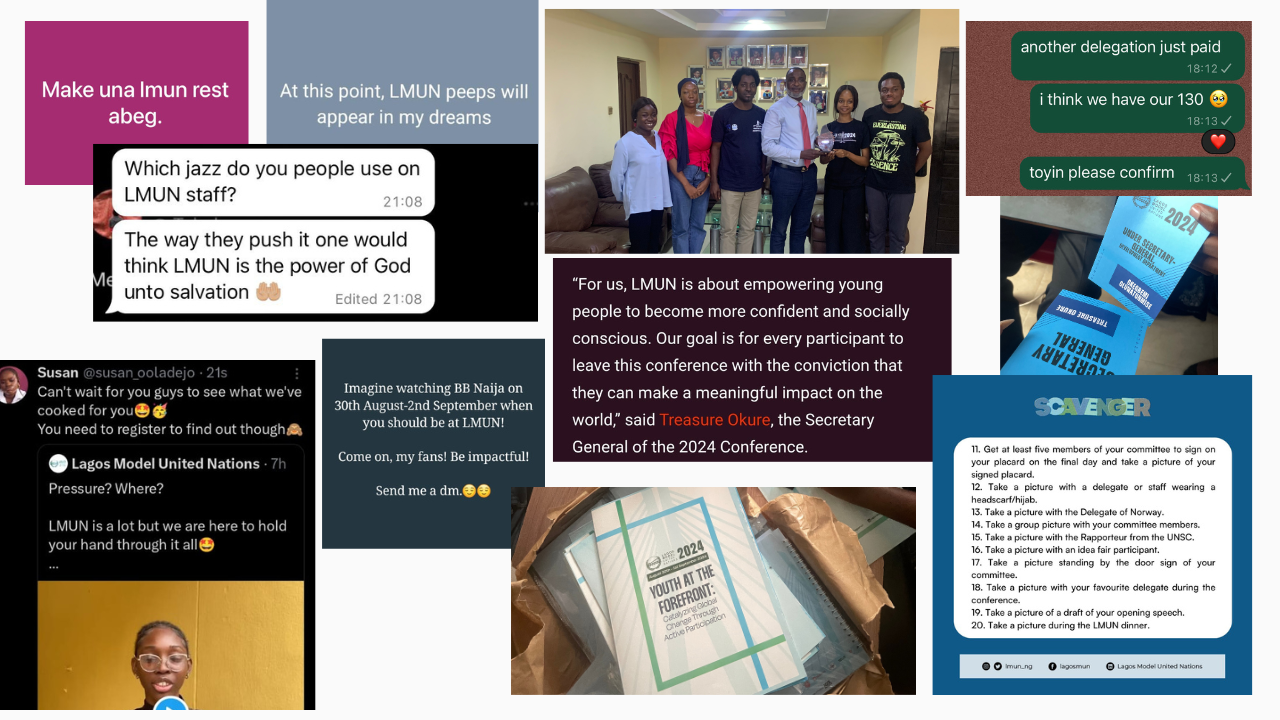
In three weeks we went from 70 to 212 delegates — more than tripling the number of registered delegates. We also raised approximately ₦5 million in those three weeks alone, compared with roughly ₦2 million raised across the previous twelve months.
Other pieces of the organisation began moving too. An alumnus contributed ₦500,000. A friend gave me ₦500,000. Alumni mobilised additional support. A new faculty Dean took ownership of our accommodation problem. A Deputy Vice Chancellor committed to keeping the generator running throughout the conference. The organisation had gone from trying to keep a conference alive to actively building one.
And finally, on 30 August 2024, 212 delegates took their seats across the conference, ready to debate foreign policy and global governance.
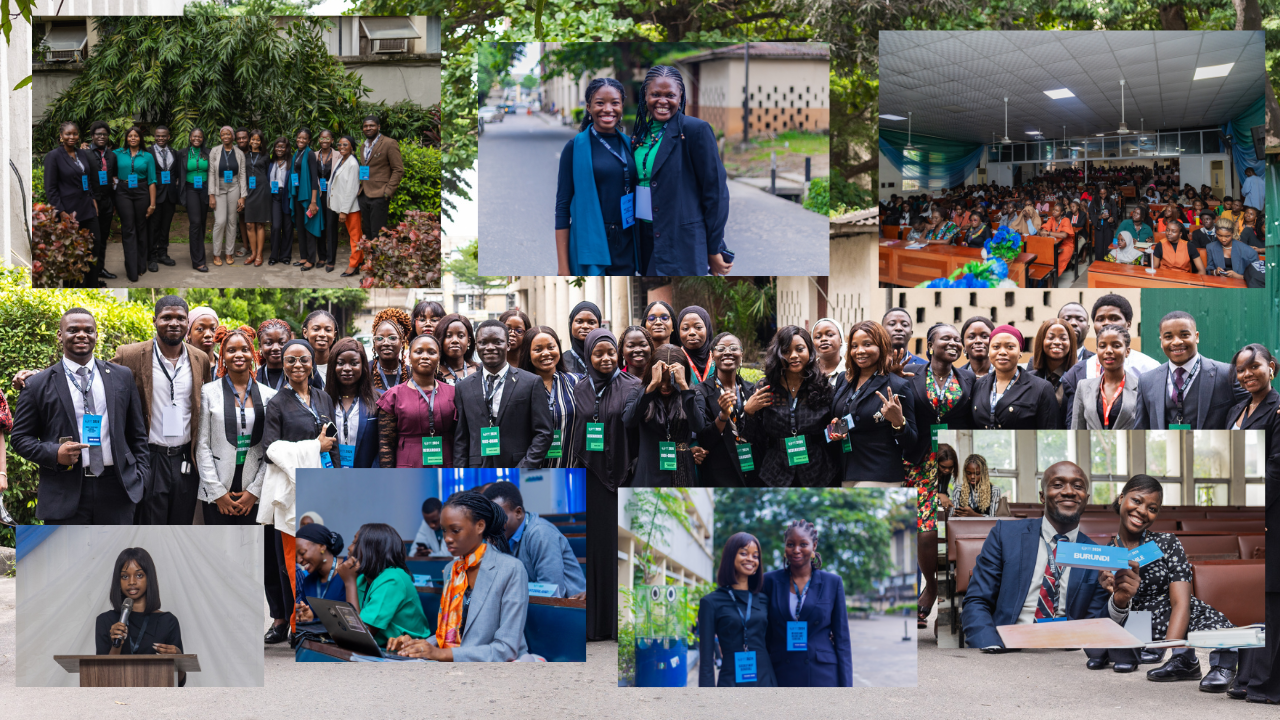
There is also a recap of the conference ↗ on Instagram.
The conference was also covered by TechCabal: Lagos Model United Nations Conference 2024 ↗
results — 2023
results — 2024
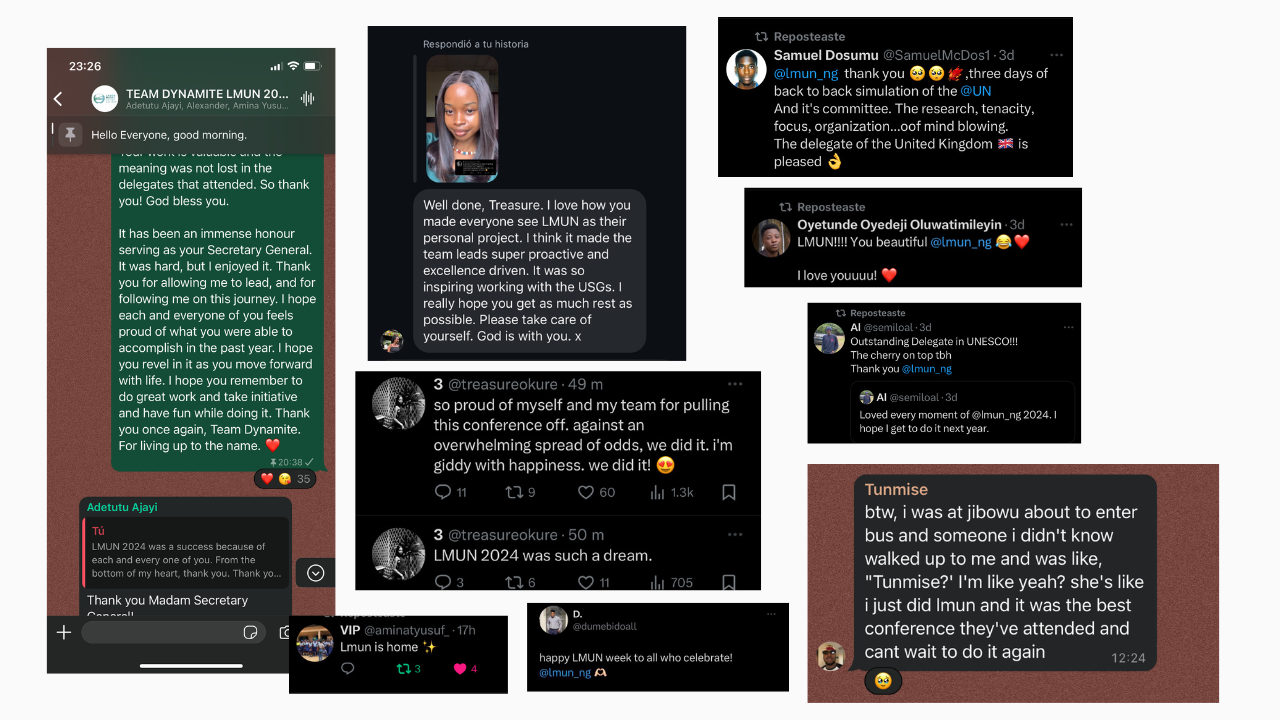
what this taught me about leadership
LMUN taught me that leadership isn't always about having the answer. Sometimes it is recognising that the current approach isn't working, making the uncomfortable decision to change it, and giving people enough clarity and autonomy to act.
The August crisis also changed how I think about motivation. For months, encouragement had produced limited movement. Once the team understood the actual stakes — and had a concrete target to work toward — behaviour changed dramatically.
The lesson wasn't that people need to be threatened into performing. It was that people need to understand what matters, what is expected of them, what they can control, and what happens if the objective isn't met.
My role wasn't to personally acquire 212 delegates. It was to create the conditions in which 92 people could collectively acquire them. That distinction has stayed with me.